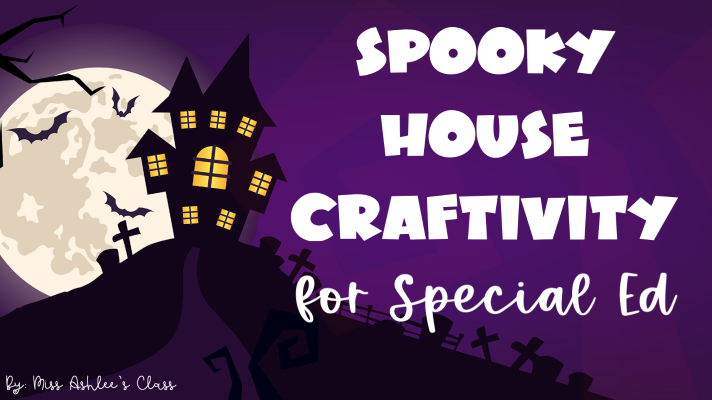
Halloween is a fun time of year to explore your five senses and get crafty in the classroom! One of my favorite Halloween activities for my elementary classes is making Spooky Houses! After our Spooky Houses are created, students take turns sharing and describing their Spooky Houses using this five senses writing activity. CLICK HERE to go check out the activity in my TPT Shop.
Step 1: Make a Spooky House
At the beginning of the month, I begin asking students to bring in small empty boxes (cereal boxes, granola bars, etc), toilet paper tubes, milk cartons, and any other crafty things (crepe paper, cotton balls, etc.) they have at home that they might want to use to make a Spooky House.
Now, you definitely don’t need to make the Spooky Houses out of boxes and paper mache and go all out. You can have students draw them or make them out of construction paper too. The idea is just to encourage students to be creative. How they make the spooky houses is up to you and your students.
Easy Paper Mache:
A super easy recipe to make paper mache is mixing 2 parts white glue with 1 part water. Done! You can even put the glue mixture in a bowl and store in a ziplock bag overnight. It will be ready to use again the next day for a second coat!
Step 2: Spooky House Anchor Chart
Once the Spooky Houses are finished, it is time to describe them! Discuss all the spooky, creepy, and silly things that are around during the Halloween season, and then ask students to think about what someone might find if they went INSIDE their Spooky House! I like to use the five senses to get students to practice describing things.
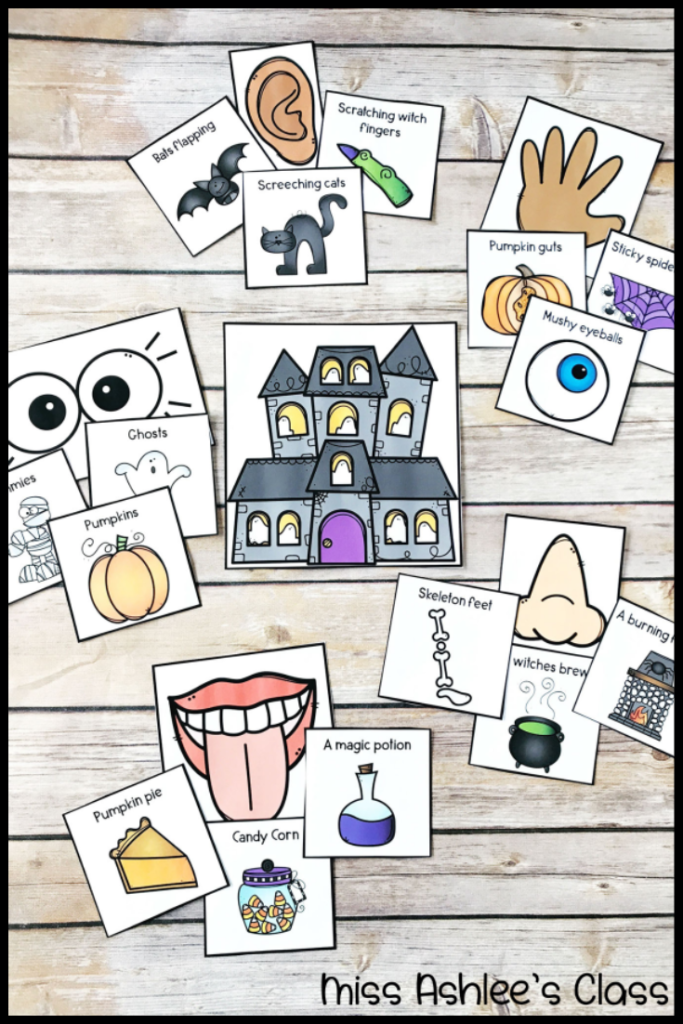
I use this spooky anchor chart activity to get students thinking. First, I pass out the spooky pictures to my students. Then, I have them take turns sharing their spooky picture and coming up to place the picture on the chart in class.
Step 3: Spooky House Writing Activity
This is where students can start getting creative with their writing. Once we have completed the anchor chart together, I have students describe their spooky house with this writing flap page activity.
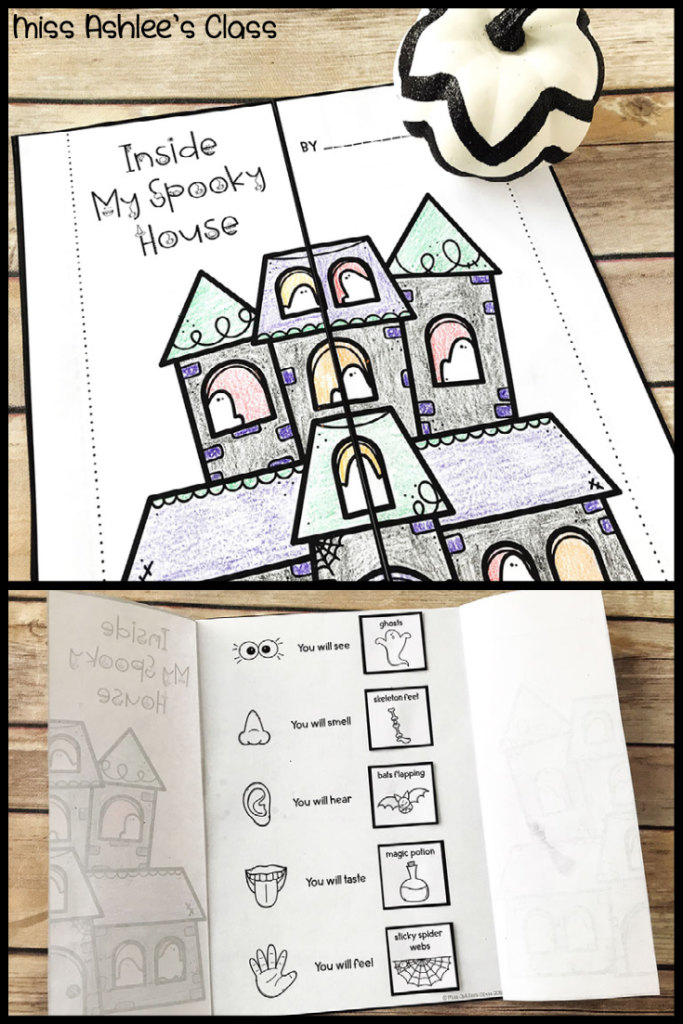
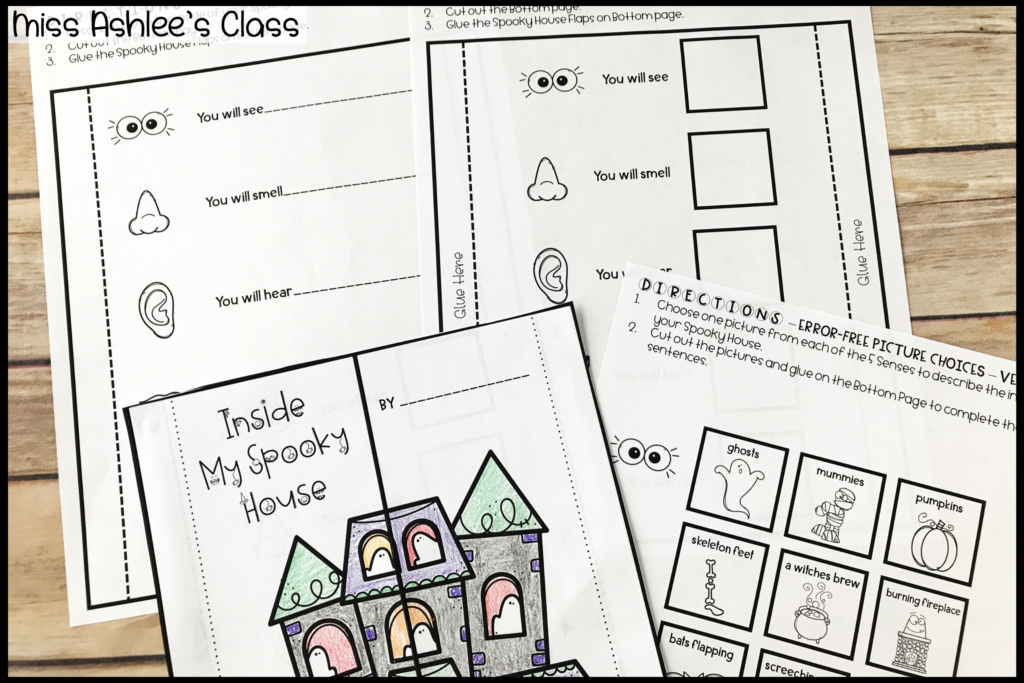
The best part about this activity, is that it is perfect for special ed! I have 2 differentiated levels of this resource. Level 1 version is for students who can write and develop their own ideas. They use the five senses to describe their spooky house and fill in the blanks on the flap page. Level 2 version is for students who have limited fine motor skills and require error-free picture support. This version is a cut and paste version with 3 error-free picture choices for each of the five senses.
Step 4: Share your Spooky House!
Once the flap page activity is completed, students can take turns sharing and describing their spooky houses with the class! This is my students favorite part! They love sharing their creations with the rest of the class.
CLICK HERE to check my Inside My Spooky House Activity in my TPT Shop! I just added a virtual component to this resource, so whether you are teaching in person this year, virtually, or both, I got you covered!
Digital Version for Google Slides
Check out the video below for a preview of the Digital Inside My Spooky House Activity.
If you are teaching virtually, you can screen share the digital anchor chart activity with your students and discuss all the spooky, creepy, and silly things that are around during the Halloween season.
Ask students to build a spooky house at home using whatever they can find or send home paper and materials for them to use. Suggest using boxes, toilet paper rolls, construction paper, etc.
Next, assign each student a copy of the Digital Inside My Spooky House Activity to complete using Google Slides™.
Once students have submitted the assignment, you can pull up each student’s completed spooky house activity in your virtual meeting and screen share with the rest of your class.
I hope you and your students enjoy making and sharing your spooky houses this year!
Thanks for reading!
CLICK HERE to check out more Halloween resources in my TPT Shop!